


































—
Date: 2026-10-12
—
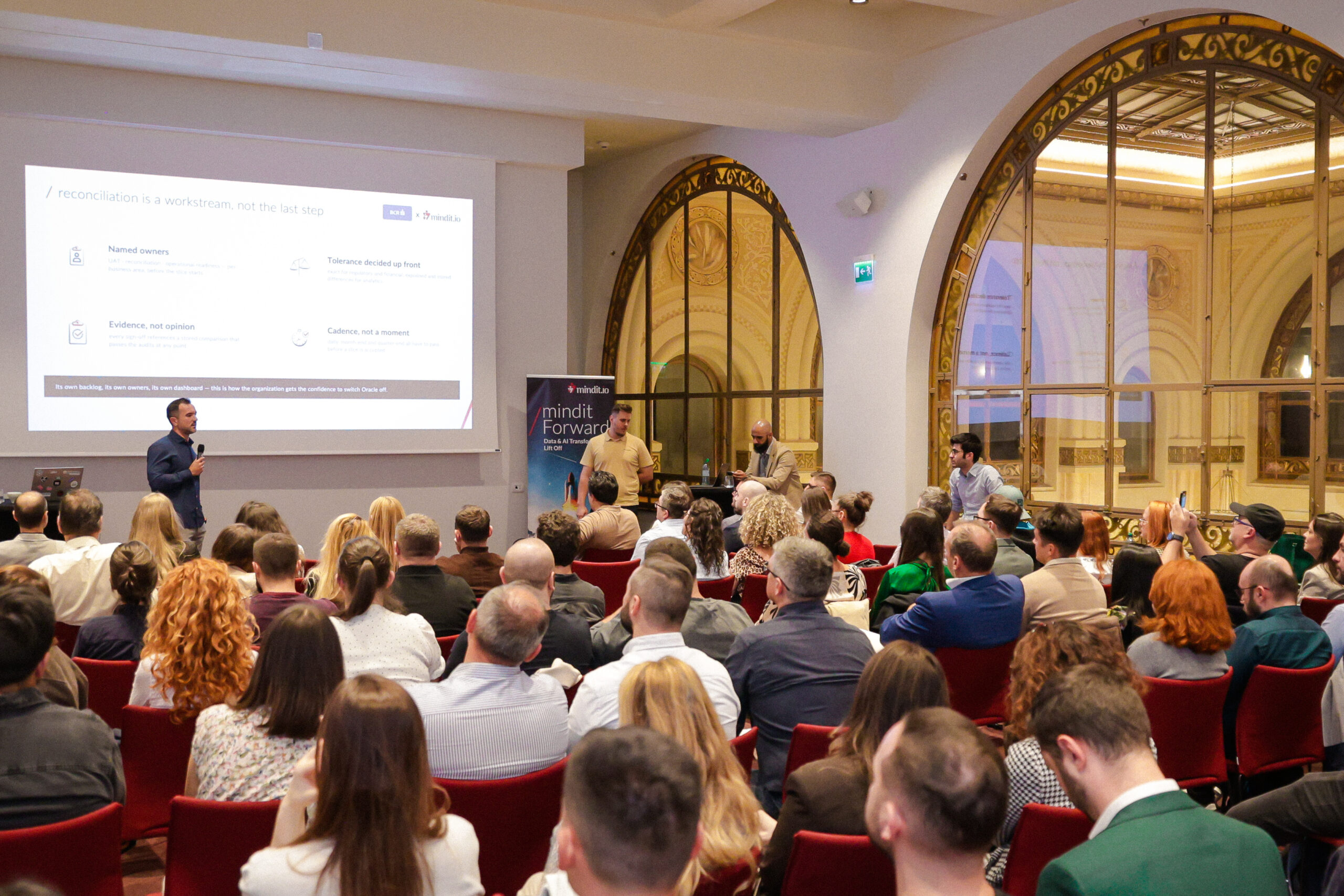
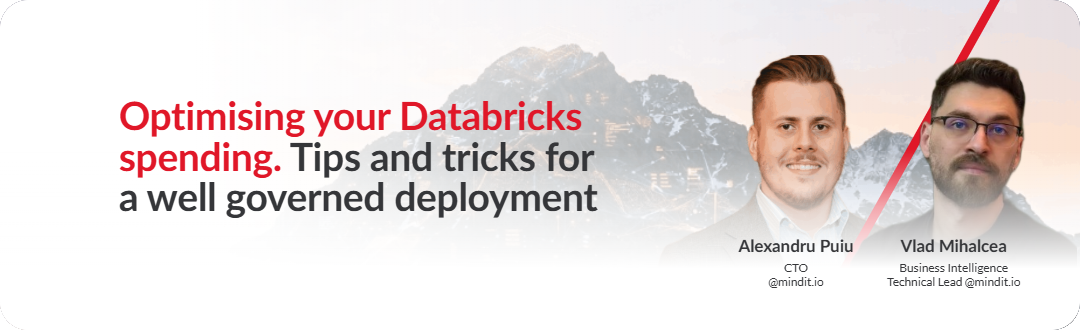
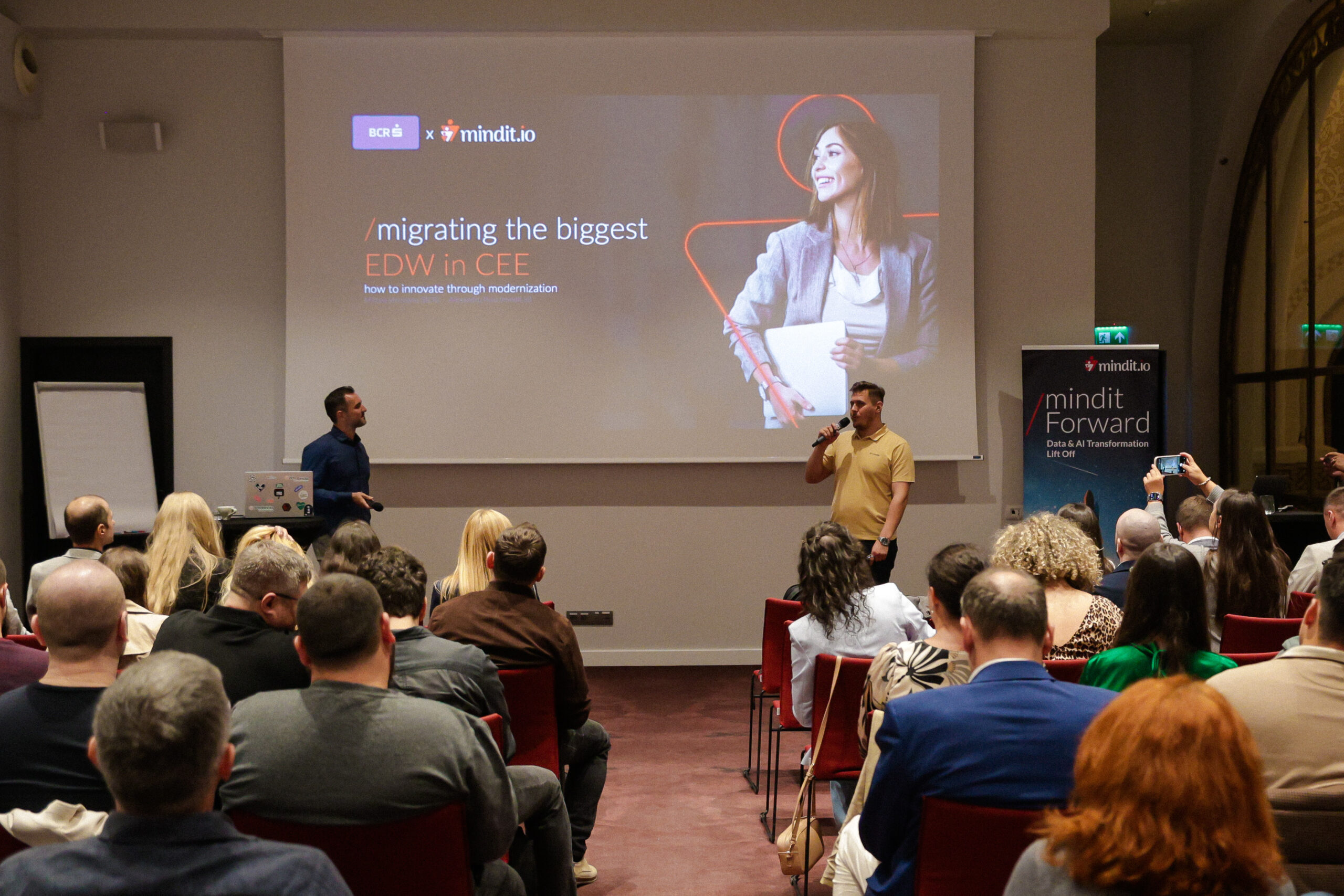
A bank’s enterprise data warehouse is not a system you swap out over a quiet weekend. Reporting, risk, regulatory work and day-to-day decisions all sit on top of it, and years of logic have accumulated inside it. At Databricks Bucharest User Group #3, Mircea Idriceanu, Head of Data for Group; Data Analytics & AI Division at BCR, and our CTO Alexandru Puiu presented how BCR moved what they describe as the biggest enterprise data warehouse in Central and Eastern Europe onto Databricks.
What the session covered
The talk was about the migration itself: moving a very large, long-running EDW onto Databricks and consolidating data warehouses into one data lake. With BCR and mindit.io presenting the project together, the session could cover both the decisions and the reasoning behind them, not only the outcome.
We are not going to retell the full talk here, because it belongs to the people who gave it. What we can describe is why a project like this is worth hearing about, and what the room took from it.
Why a migration at this scale is more than moving data
When an EDW is the center of an organization’s data, a migration touches far more than tables. Pipelines built around the old engine have to be rebuilt or rethought. Downstream reports and consumers need to keep producing numbers people trust. Access rules, ownership and documentation have to carry over, or be improved on the way. And all of that has to happen while the business keeps running on the data.
That is the reason these projects tend to be as much about decisions as about code: what to move as is, what to redesign, how to prove the new platform matches the old one, and when to switch off what came before. Hearing how a real organization worked through those choices is more useful than any generic migration checklist.
An audience that already knew the platform
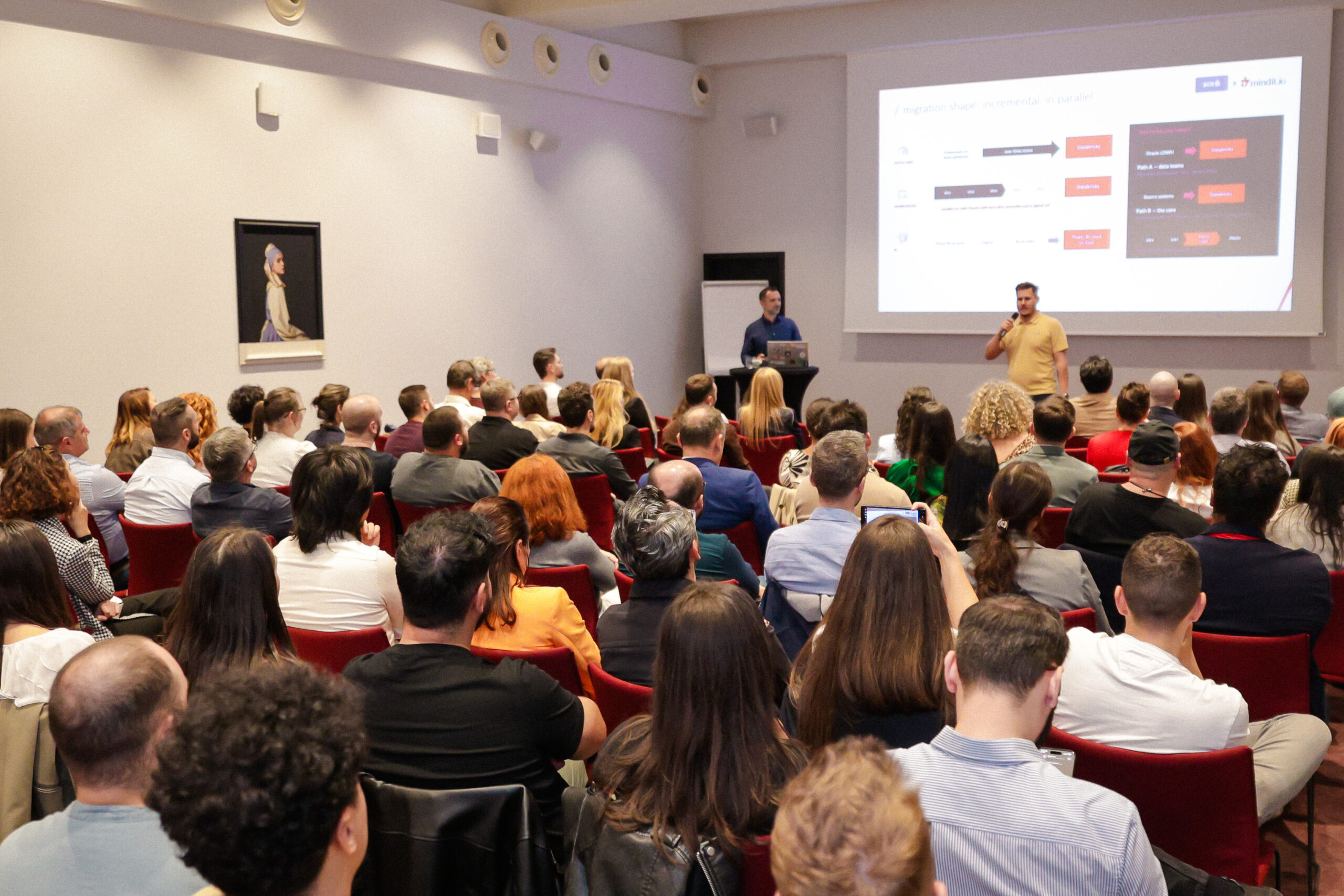
Mircea told us what stood out to him about the room. Many of the people there were already familiar with Databricks and with projects like this one, and a lot of them had worked on similar ones themselves. That changed what was interesting to talk about. As he put it: “Beside the technical aspects, it was interesting to also hear about the governance and the transformation behind this.”
That matches how these migrations tend to go in practice. The platform is only part of it. Governance, ownership and the change inside the organization are what decide whether a migration actually delivers value after the cutover. According to Mircea, the people he spoke with afterwards were happy with the session.
Why we wanted this on the agenda
We co-organize Databricks Bucharest User Group because we want practitioners in Romania to hear from teams that have done the hard version of the work, not a polished highlight reel. A bank moving its core data warehouse is exactly that kind of story, and we are grateful to BCR and to Mircea for sharing it with the community.
If you missed the evening, read the full recap of Databricks Bucharest User Group #3. To hear about the next edition first, follow mindit.io on LinkedIn.
