






































Banks learned years ago that fraud is easier to stop together than alone. Aviation is only now catching up. A single trip can involve an airline, a partner carrier, a travel agency, a payment provider and an airport, often across several countries and legal systems, and each of them sees only a slice of what’s happening. A pattern that looks almost normal to one airline can be obvious once several of them compare notes. The challenge is doing that without exposing passenger data or giving away competitive information.
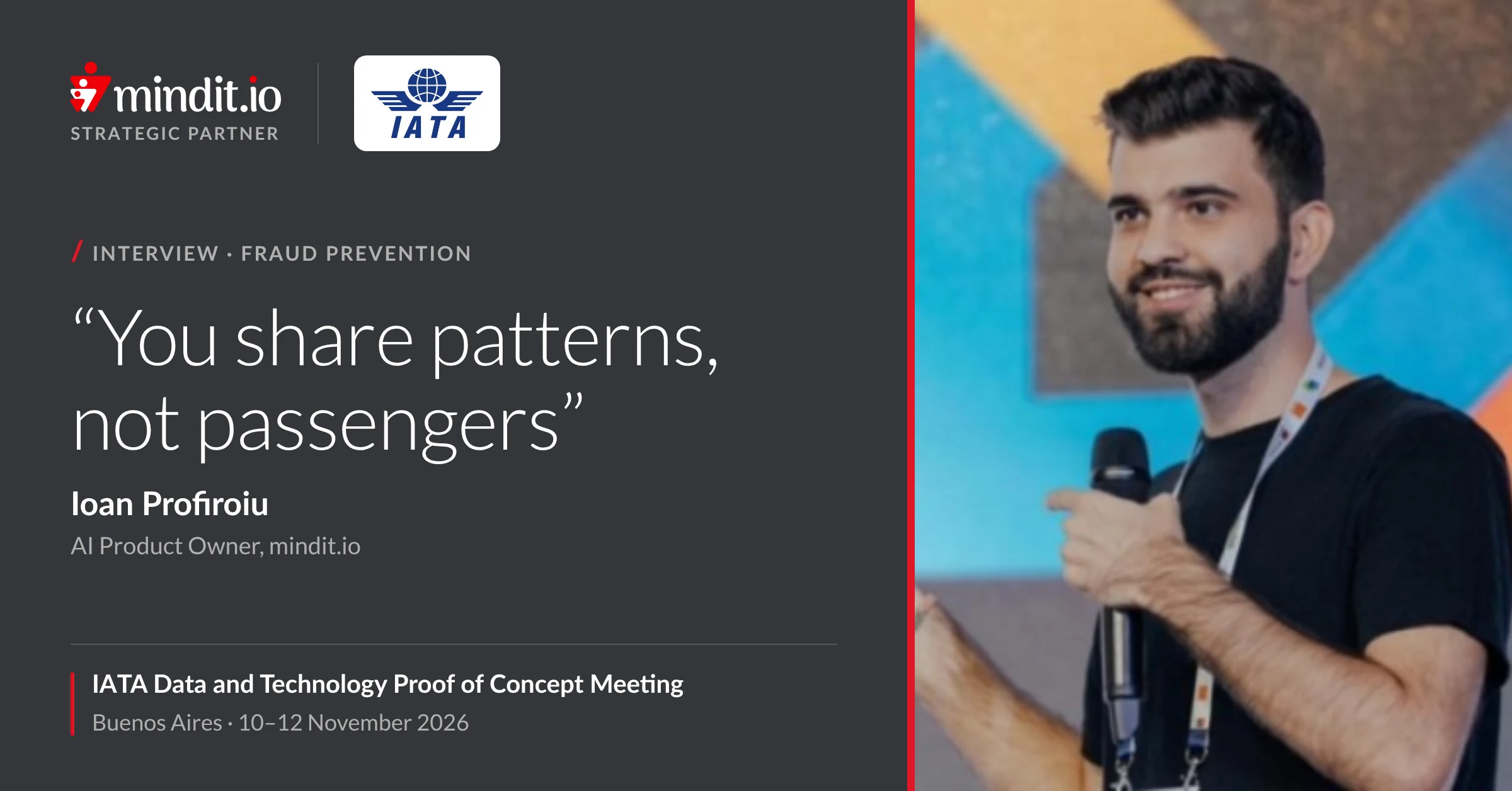
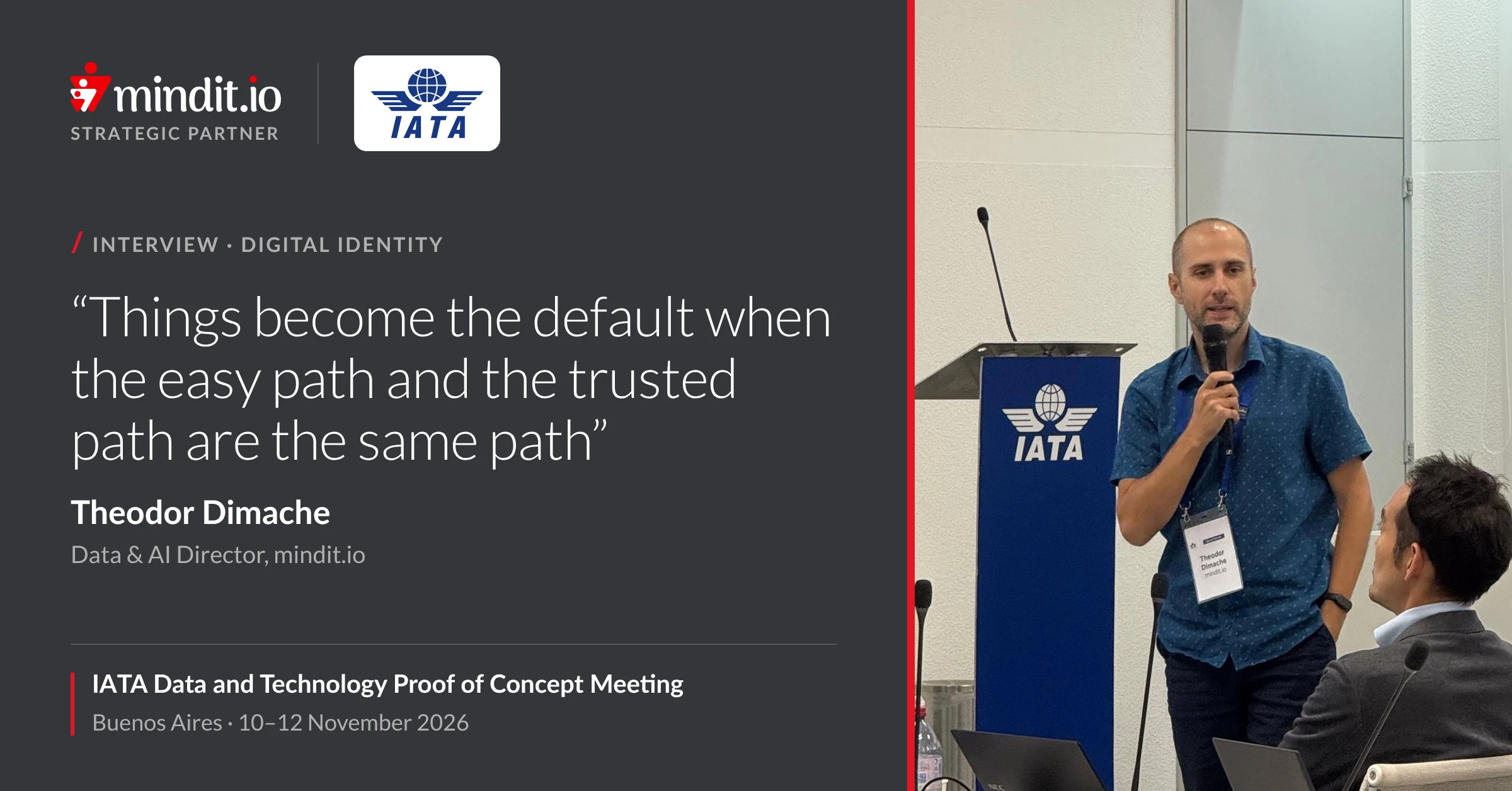
Ioan Profiroiu, AI Product Owner at mindit.io, works on exactly this problem in the Aviation Fraud & Risk Pattern Exchange, one of the Cycle 3 tracks in IATA’s Data and Technology Proof of Concept program. Ahead of the Data and Technology Proof of Concept Meeting in Buenos Aires on 10–12 November, where airlines and technology partners within the IATA Strategic Partnerships Program meet to move the proofs of concept forward, we talked to Ioan about why the PoC starts with loyalty fraud, how to share intelligence safely, and where AI stops and human judgment takes over.
1. Banks have shared fraud intelligence for years. Why hasn’t aviation built the same kind of shared defense, and what makes it harder?
Honestly, I think part of it is that banks were forced into it earlier. Fraud hit their balance sheets directly and regulators pushed them to cooperate, so the legal frameworks grew up together. In aviation, fraud has often been treated as a cost of doing business, something each airline handles quietly on its own. That’s getting harder to justify, because the number of attacks has grown considerably and fraudsters move fast.
It’s also structurally different. A single trip can touch an airline, a partner carrier, a travel agency, a payment provider, an airport, all with different systems, data formats and legal obligations, often across several countries. So the problem isn’t a lack of willingness, is getting everyone to speak the same language.
2. The exchange covers document misuse, booking fraud and disruption indicators. As an AI Product Owner, which would you prioritize first, and why?
For the proof of concept we have started with loyalty fraud: fake account creation, accrual abuse and redemption fraud. Booking and payment fraud already has strong coverage through IATA Perseuss. Loyalty is the area where nothing comparable exists today, it is also the area where cross-airline visibility makes the biggest difference. Each airline sees a slice that looks almost normal, but together, the pattern is clearer.
3. Sharing fraud patterns means sharing sensitive data. How do you design the exchange so it’s useful without exposing passenger data or giving away competitive information?
The key idea is that you share patterns, not passengers or personal information. Nobody needs to know that a specific person booked a specific flight. What’s useful is something like “bookings with this combination of signals, from this kind of channel, in this time window, have a high fraud rate.” That can be described without any personal data in it. In practice that means a few things: pseudonymization or hashing before anything leaves an airline, aggregating signals so individual records can’t be reconstructed, and being strict about what fields are even allowed into the exchange.
4. What role does AI play in detecting fraud patterns early, and where does a human still need to make the call?
AI does the things people cannot do at this speed or scale. Scoring a login or a redemption in under a second. Noticing that one device has touched forty new accounts across four airlines in an hour. But AI isn’t making the final call on its own, and humans still have a very clear job of taste. Fraud analysts review the cases the AI flags and decide.
5. What are you bringing to the Data and Technology Proof of Concept Meeting in Buenos Aires, and what would make this PoC worth taking into production for an airline?
We’re coming as the technology partners, so we’ll be focusing on solution design, and making sure that what we build is a helpful, functional and precise, not just a nice demo. Precision really matters here. A model that flags too many legitimate travelers creates as many problems as it solves.
