





































mindit.io logo
    • retail
      • / retail

        Retail industry, mindit.io

        In the intricate world of retail, mindit.io stands out as your strategic ally.

    • banking
      • / banking
        Woman using a card payment terminal, retail sector, mindit.io

        We partner with European banks on AI transformation, data-platform modernization, and regulatory-grade integration across Benelux, DACH, and UK.

    • financial services
      • / financial services

        Financial services: mindit.io data and AI

        Custom software and data platforms for asset managers, payments providers, and insurers across DACH and the US.

    • healthcare
      • / healthcare

        Doctor with digital tablet in hospital, healthcare sector, mindit.io

        ML and integration solutions for hospitals, health-tech platforms, and national health systems, including Switzerland’s national health sector.

    • hospitality
      • / hospitality
        Hospitality: mindit.io data and AI

        Operational and guest-experience software for hotels, restaurants, and global travel groups.

    • foodtech
      • / foodtech
        Burger and fresh salad, food and beverage sector, mindit.io

        Product engineering for the food industry: from plant-based configurators to supply-chain analytics.

    • manufacturing
      • / manufacturing
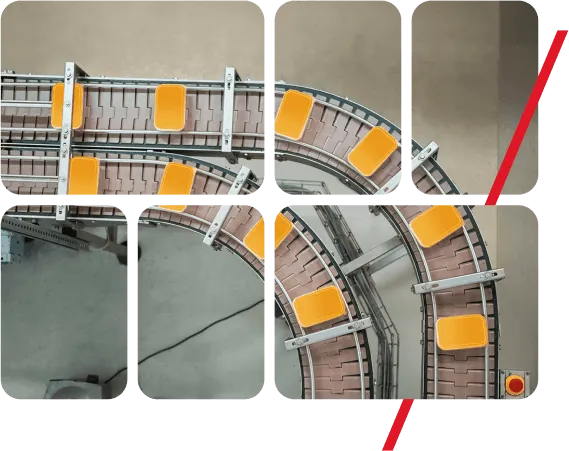
        Aerial view of industrial conveyor belt, manufacturing sector, mindit.io

        Industrial software, IoT integration, and data platforms for manufacturers modernizing operations.

    • publishing
      • / publishing
        Publishing: mindit.io AI solutions

        ML platforms and editorial workflow systems for publishers, including Izzard Ink Publishing.

    • real estate
      • / real estate
        Modern residential buildings at dusk, real estate sector, mindit.io

        Property tech and data analytics for real-estate operators and asset managers.

    • telco
      • / telco
        Person using smartphone, telecom sector, mindit.io

        Telecom-grade software for network optimization, customer-facing apps, and AI-driven insights.

    • / company
    • about us
      • / about us

        mindit.io partners and people
        The partner of choice for data & product engineering to drive business growth & deliver an impact within your organization
    • product engineering
      • / product engineering
        We specialize in Software Product Engineering, transforming your concepts into impactful products.
    • technology
      • / technology
        mindit.io AI Native company
        250+ specialists skilled in software, BI, integration, offering end-to-end services from research to ongoing maintenance.
    • methodology
      • / methodology
        Custom software solutions, mindit.io
        We specialize in software product engineering, transforming your concepts into impactful products.
    • careers
      • / careers
        Careers at mindit.io
        Our team needs one more awesome person, like you. Let’s grow together! Why not give it a try?
    • do good
      • / do good
        mindit.io team member do good ESG initiatives by the sea
        We’re a team devoted to making the world better with small acts. We get involved and always stand for kindness.
    • events
      • / events
        From Databricks’ Data + AI Summit to Day-to-Day: How the Latest Announcements Impact Real Deployments – Live Webinar
    • blog
      • / blog
        Databricks Just Moved the Goalposts. Here’s What That Means for Your Team.
        Databricks just rebuilt the data stack for AI agents. Here is what Retail and Banking should do about it.
    • contact us
      • / contact us
        Request a mindit.io webinar
        We would love to hear from you! We have offices and teams in Romania and Switzerland. How can we make your business thrive?
  • / get in touch

helping enterprises become AI-native organizations

Revolutionizing Design Systems with Large Language Models: A Journey into AI-Assisted Creativity

In today’s technologically driven world, harnessing the power of Artificial Intelligence (AI) to streamline tasks and boost efficiency has become an integral part of various industries. The design sector, specifically, is witnessing a monumental shift in how design systems are developed and implemented, thanks to the influence of AI. Among the most promising AI technologies propelling this transformation are Large Language Models (LLMs) like OpenAI’s GPT-4. With their capacity to understand, generate, and interact with human-like text, these LLMs are making the creation of design systems easier and more accessible than ever before.
Understanding Large Language Models

Large Language Models are AI models trained on massive volumes of text data. They are capable of processing and understanding written language, effectively simulating human-level text comprehension. LLMs can generate human-like text based on the input they receive, making them invaluable for tasks ranging from customer support to content creation, and now, to design systems.
LLMs and Design Systems

A design system is a collection of reusable components, guided by clear standards, that can be assembled to build any number of applications. They provide a unified language and structure for teams, enabling designers and developers to work more efficiently and cohesively. Design systems are becoming increasingly prevalent, particularly in digital product design, where they help to maintain consistency across different platforms and devices.

Incorporating LLMs into the process of creating and maintaining design systems holds immense potential. AI-assisted design tools equipped with LLMs can aid designers by suggesting improvements, spotting inconsistencies, and even generating design elements based on natural language inputs.
Streamlining Design Systems with AI

The integration of AI and LLMs into design processes offers myriad benefits, notably making design systems easier and faster to develop and implement.

‍Automating Routine Tasks: A significant part of design work involves repetitive tasks, such as creating similar components with slight variations or applying the same color scheme across different elements. LLMs can automate these tasks by understanding the pattern and executing the tasks across the design system, thereby allowing designers to focus on more creative and complex aspects.

Ensuring Consistency: Consistency is a cornerstone of effective design systems. With their ability to analyze and understand design patterns, LLMs can help ensure consistency across all design elements. They can spot anomalies and suggest corrections, thereby eliminating the risk of human error.

Generating Design Elements: Imagine being able to describe a design component in natural language and have the AI generate it for you. With LLMs, this becomes possible. Designers can input descriptions of components, and the AI model can interpret these descriptions and generate the corresponding design elements.

Design Documentation: LLMs can aid in maintaining up-to-date design documentation. They can generate and update documentation based on changes made within the design system, ensuring that all team members always have access to the latest guidelines and principles.

The Future of AI-Assisted Design

As we continue to push the boundaries of what AI and Large Language Models can achieve, their role in design systems is likely to grow. They offer the promise of a design process that is more efficient, consistent, and creative, removing barriers and opening new possibilities.

In a future powered by AI and LLMs, we might see design systems that can evolve and learn, adapting to changing user needs and business goals. These systems could auto-generate designs based on user behavior, market trends, or specific criteria set by the design team.

While we must be mindful of potential challenges and ethical considerations, the potential benefits of integrating AI into design systems are undeniable.

Distribute:

/turn your vision into reality

The best way to start a long-term collaboration is with a Pilot project. Let’s talk.