






































—
Date: 2026-10-12
—
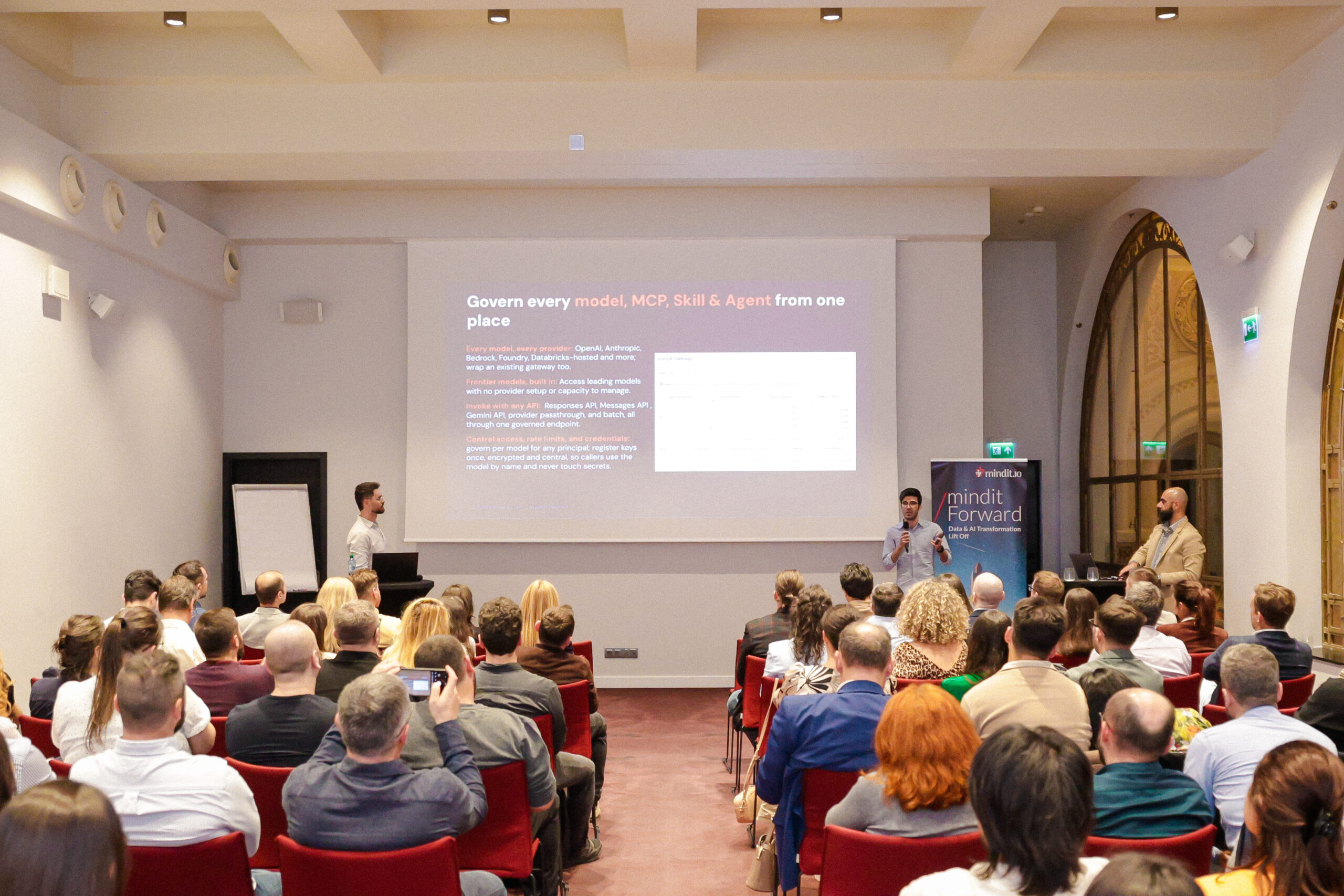
Ask most teams what governance means on a data platform and you will get answers about access and permissions. Ask the same teams a year into running AI workloads and the conversation shifts: what is this costing us, who is running it, and can we explain what it did? At Databricks Bucharest User Group #3, our Lead Data Engineer Vlad Mihalcea and Burak Seyid, Solutions Architect at Databricks, took that second conversation as their starting point, in a session on governance from cost optimization to AI transparency.
What the session was about
The talk looked at two problems that tend to show up together as a Databricks deployment grows: keeping compute costs under control, and keeping AI workloads transparent and auditable. Instead of treating them as separate workstreams owned by different teams, the session put them side by side.
We are not going to reproduce the session here, since the detail belongs to the speakers. This article is about why the framing matters and why it landed with the room.
Why the two belong together
Cost and transparency look different on a slide, but they start from the same questions. Who ran this workload? For which team or project? What did it use, and what did it produce? A platform that can answer those questions for cost can usually answer them for audit, and one that cannot answer them for either is hard to run at any scale.
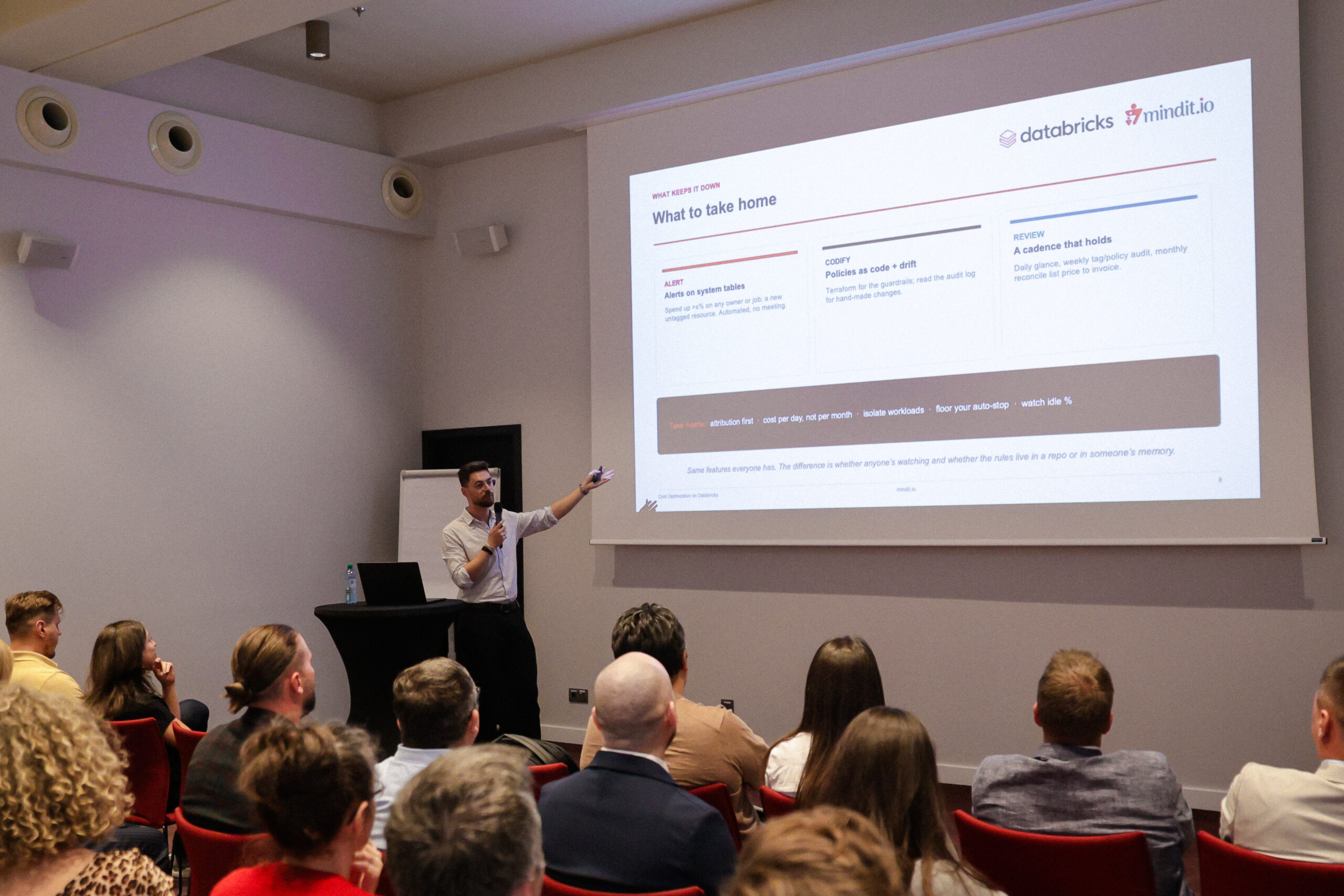
In practice, that means governance is less a policy document than an engineering problem. Compute has to be attributable. Workloads have to leave a trail. Ownership has to be clear enough that someone can be asked about a spike in spend or about an AI output that needs explaining. When these are handled as separate efforts, teams end up with two partial answers instead of one reliable one.
Why this is getting more urgent
Our Partnerships Director, Roxana-Maria Staneiu, pointed to a related challenge in her recap of the evening: how to give AI agents more context so they perform better, cost less and deliver real value in the field. It is the same pattern from another angle. As AI moves from experiments into production, the questions about cost, behavior and accountability stop being separate. They arrive together, and the teams that have already built the foundations for answering them are in a much better position.
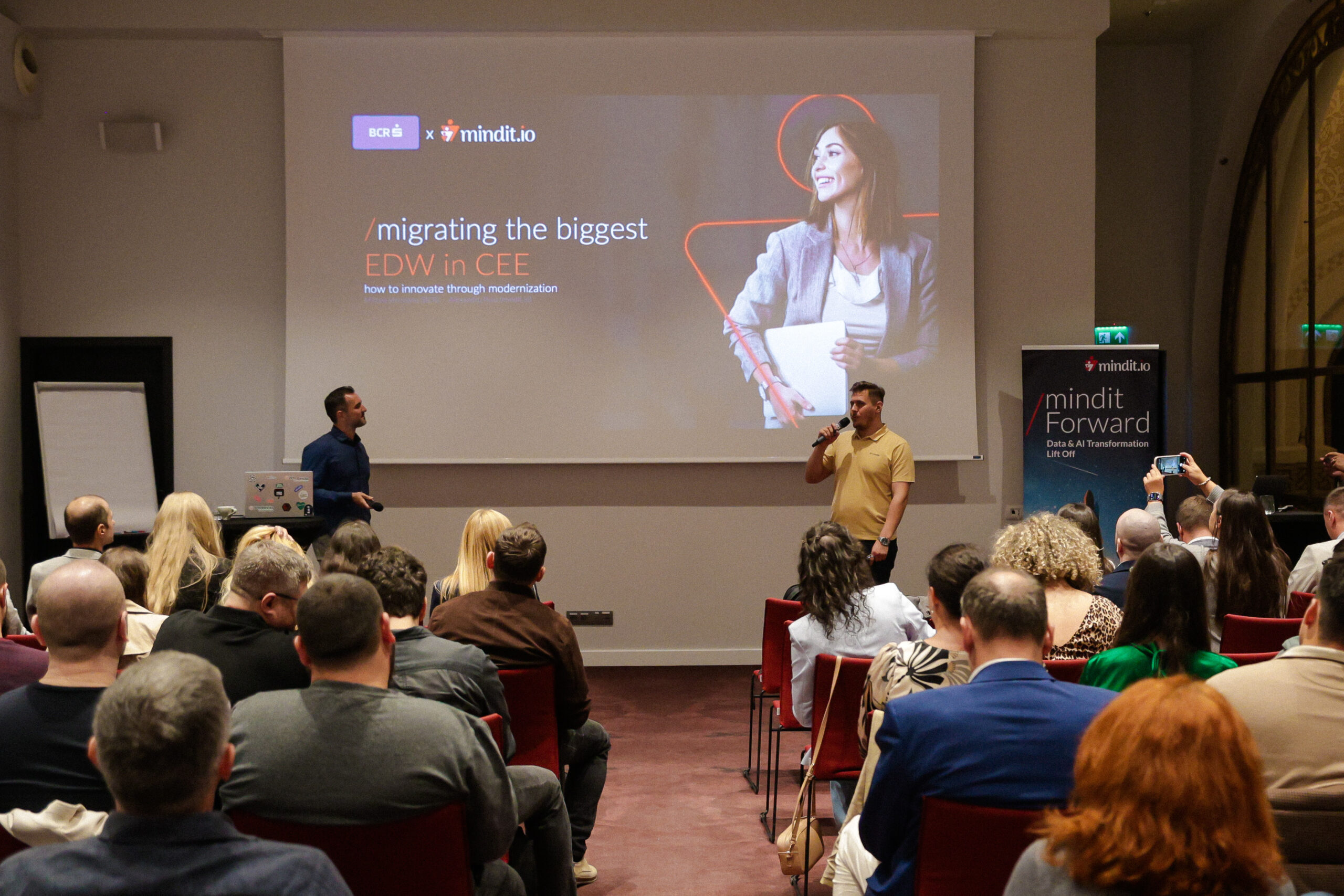
That is also why this topic sat well next to the others on the agenda. A large warehouse migration and an AI-driven trading use case both depend on a platform that is controlled, attributable and understood. Governance is what makes the other two sustainable.
Where to start
For teams earlier in this journey, the useful move is usually small and concrete: pick one area, such as compute usage or one AI workload, and make it fully attributable and traceable before trying to cover everything. A narrow version that works gives you a pattern to extend, and it tends to expose the real gaps faster than a broad policy would.
Thank you
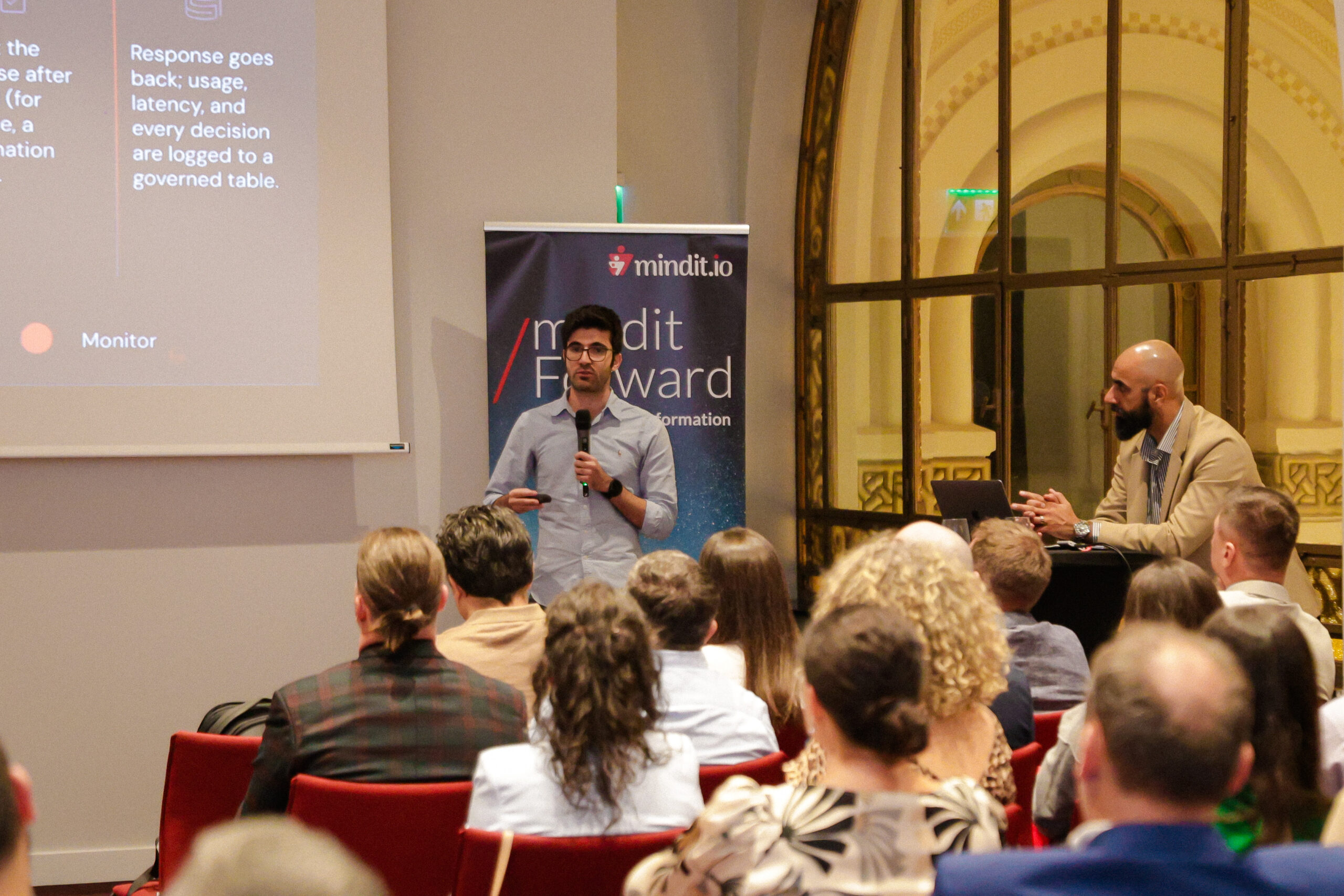
Thank you to Vlad and Burak for the session, and to everyone who stayed to ask questions. As co-organizers of the largest Databricks meetup in Bucharest, we want governance to be a regular topic in this community, not an afterthought.
To read about the rest of the evening, see our full recap of Databricks Bucharest User Group #3. To hear about the next edition first, follow mindit.io on LinkedIn.
