








































Modern AI is no longer a lab topic for banks. In Germany, Austria, and Switzerland, the conversation has moved from “Can we pilot this?” to “How do we run the bank safely and profitably with it?”
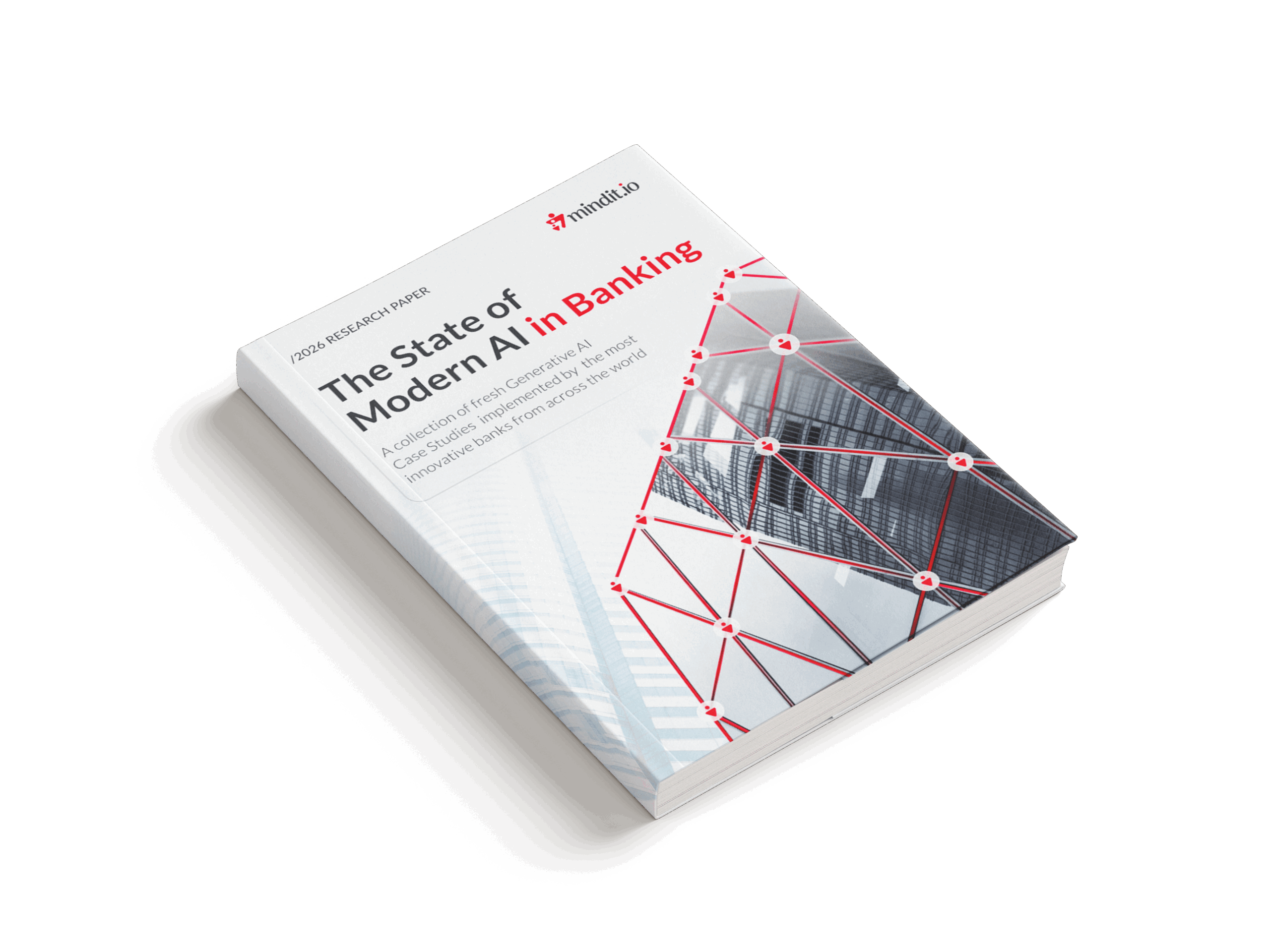
That shift is exactly why we created “The State of Modern AI in Banking 2026”, a practical, executive-ready report built to help banking leaders (CEO, CIO, CTO, COO, CFO, Heads of Risk, Legal, HR, and Customer Operations) understand what’s working, what’s failing, and how to scale modern AI with control.
The report brings together 65 real-world case studies across retail and corporate banking, plus frameworks to help you move from experimentation to measurable business outcomes, without losing sight of compliance, risk, and operational reality.
Why “Modern AI” (not just “GenAI”) matters for banks in 2026
When most people say “AI” today, they mean generative AI. But in a banking context, modern AI is broader:
- Traditional machine learning still wins in many areas like forecasting, probability-based scoring, and pattern detection in structured data (for example credit risk and time-series).
- Generative AI shines when the work involves language, documents, knowledge retrieval, synthesis, reasoning support, and creating “first drafts” at scale (customer communications, internal operations, legal review support, employee copilots).
In practice, most high-impact banking programs combine both. They use machine learning where it is cost-effective and predictable, and GenAI where it unlocks productivity in knowledge-heavy workflows.
The next productivity leap for banking is already underway
Banking has seen major productivity waves before. Core banking systems, ATMs, electronic transfers, spreadsheets, then online and mobile banking. Modern AI is shaping up to be the next one, not because it is trendy, but because it changes how work is executed.
Two macro forces are accelerating adoption:
- Costs have dropped dramatically. According to Stanford HAI’s AI Index, the cost to query models at GPT-3.5 level performance fell from about $20 per million tokens (Nov 2022) to around $0.07 (Oct 2024), which is a 280x reduction in about 18 months.
- Regulation is becoming clearer. The EU AI Act is rolling out in phases, with key milestones that matter for banking governance, especially around general-purpose AI obligations starting 2 August 2025 and broader application following later.
For DACH banks, this combination is critical. The business case is getting stronger while the “how to do it responsibly” is becoming more defined.
What’s changing fast: from chatbots to agentic banking workflows
Early generative AI adoption was mostly Q and A. Ask a question, get a response. Then came RAG, retrieval augmented generation. It grounds responses in internal knowledge bases to reduce cutoff-date issues and improve accuracy.
Now the frontier is agents and agentic workflows:
- Agentic loops: the system plans, takes actions in tools, observes results, and iterates until it meets a goal.
- Agentic workflows: structured, auditable flows where humans remain in the loop and AI steps are controlled and evaluated.
For regulated environments like Germany, Austria, and Switzerland, this matters because it supports traceability, approvals, and operational control. This is the difference between a cool demo and something you can defend in front of compliance and audit.
The DACH reality: what banks underestimate when scaling AI
In our webinar discussion, one theme kept repeating. Technology is rarely the blocker. The hardest part is adoption in a regulated, legacy-heavy environment, where security, procurement, legal, and risk controls can slow progress.
A widely cited MIT-backed finding from 2025 highlighted that most generative AI pilots fail when they collide with real organizational complexity, such as integration, data quality, governance, and operating model constraints.
For DACH banks, pilot purgatory typically happens when:
- teams build proofs of concept without a production path
- governance is bolted on too late
- ownership is unclear (IT vs business vs risk)
- legacy systems make integration slow
- adoption is treated as training instead of operating model change
What successful banks do differently: the 3-part formula
Across the case studies we selected, successful programs consistently align around three pillars:
1) Strategy: a clear ambition and prioritized use cases
Banks do not lack ideas. They lack focus. The winners use a structured funnel to identify use cases with the best ROI and operational fit, rather than chasing dozens of disconnected pilots.
2) Organizing: champions, governance, and top-down adoption
AI at scale is cultural and operational. Successful banks treat AI literacy as leadership work, not a side initiative. Adoption sticks when executive sponsorship is real, ownership is defined, and business and IT build together.
3) Technology: the right infrastructure for speed and control
Banks need an AI layer that supports:
- model and vendor flexibility (cloud and open source options)
- evaluation and observability (to track quality and risk)
- secure integration into existing systems
- rapid iteration as models evolve
This is how you create a safe space to experiment, without losing governance.
What you’ll find inside “The State of Modern AI in Banking 2026”
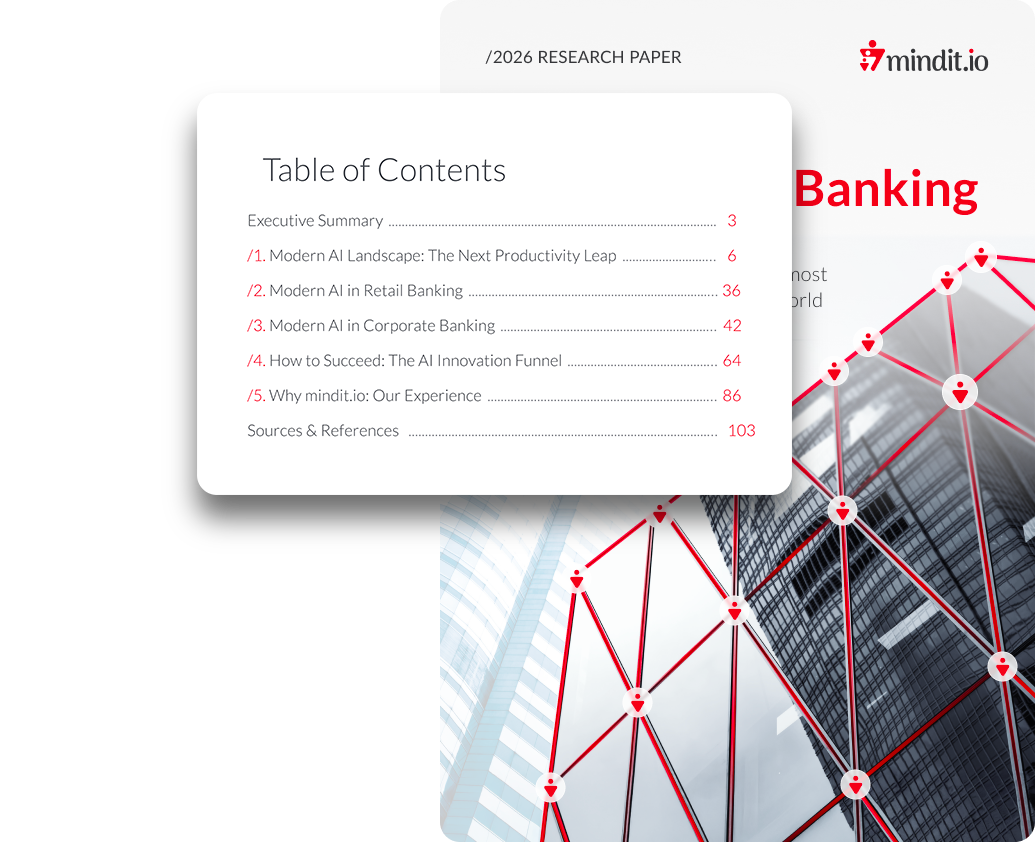
This report is designed to be used as a reference guide by DACH banking leaders and transformation teams. Highlights include:
65 real-world banking case studies (retail plus corporate)
- Retail banking: 47 examples across front office, middle office, back office, and corporate and IT functions
- Corporate banking: 18 examples including legal, document processing, productivity copilots, and platform modernization
Proven ROI patterns banks can replicate
You will see repeatable value levers such as:
- customer service automation and improved containment
- document processing acceleration and cost reduction
- legal and compliance workflow support
- employee copilots for email, knowledge queries, and drafting
- AI-enabled modernization paths that work with legacy constraints
A pragmatic roadmap to move from pilots to production
The report includes frameworks that help leaders answer:
- Where do we start?
- How do we prioritize?
- What governance do we need?
- What operating model changes are required?
- How do we measure success continuously?
The takeaway for 2026: speed matters, and control matters too
The question for DACH banking leaders is not “Should we adopt modern AI?” It is this:
How do we build the foundation to scale responsibly, fast enough to capture the productivity leap, while staying compliant and in control?
That is the purpose of this report. It helps you benchmark what is happening, learn from deployed examples, and choose a scalable path.
Download the report
Use this link to access “The State of Modern AI in Banking 2026”.
Next steps
- Book a 30-minute call with our architects
- Follow us on LinkedIn to stay updated with the latest news from mindit.io
- Connect with us to explore partner integrations for your data and AI journey
